One floor apart
For years, early in my career, our office sat one floor below the clinical floor.
We were close enough to hear the hospital working: the morning queue, names being called, the rush when an emergency came through. When something we had configured got in the way, nobody raised a ticket. Someone walked down the stairs to tell us.
That staircase taught me more about digital health than any specification document ever did.
Two different languages
Downstairs, we spoke the language of systems: mandatory fields, validation rules, workflows.
Upstairs, the language was different:
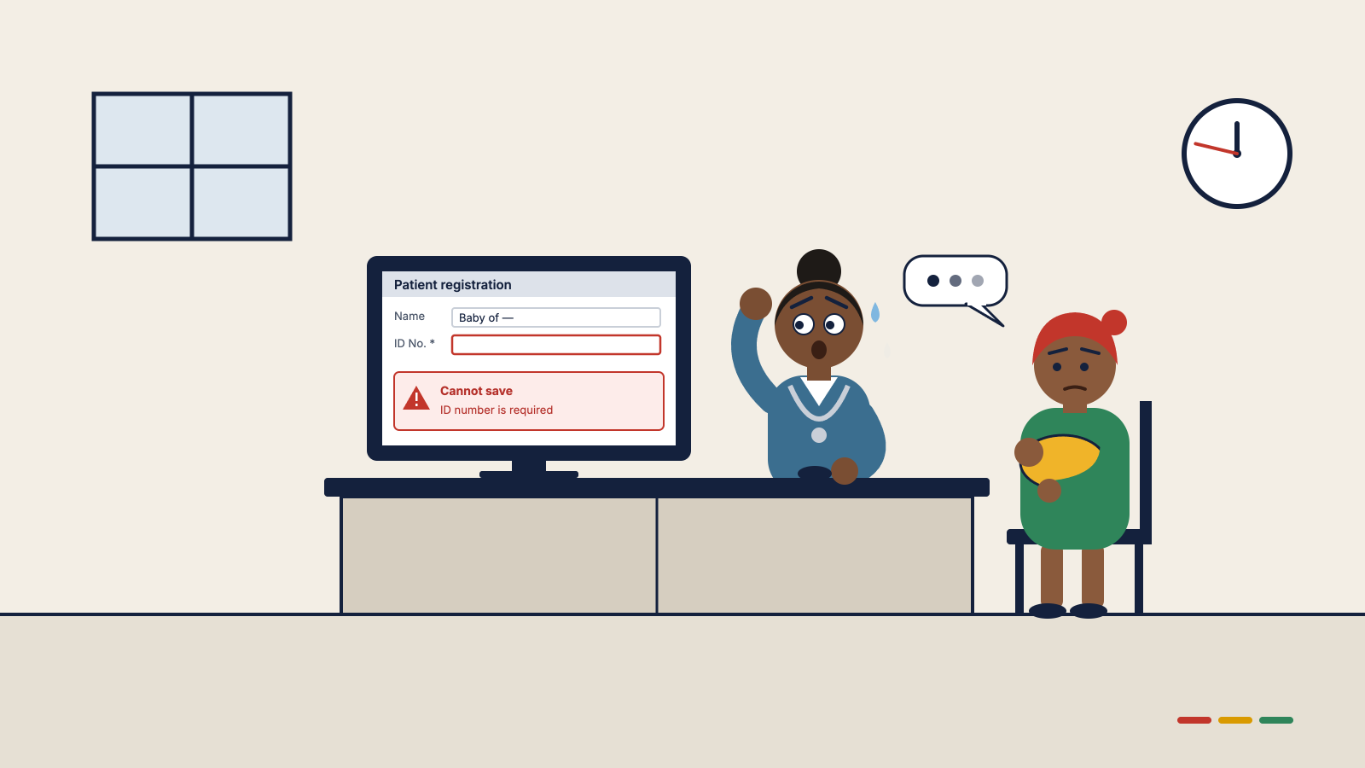
“The baby has no number yet. What should I enter?”
“The network is down. Do we wait, or do we switch to paper?”
The processes we implemented weren’t designed by bad people. They were designed carefully, in boardrooms, to solve real problems like fraud, cost and accountability. On paper, the logic was sound.
But on the clinical floor, paper logic meets real life. You get the unconscious patient with no ID, the newborn missing from every registry, and the elderly man whose name is spelled three ways across three records.
Edge cases have names
In the boardroom, these are “edge cases.”
One floor up, they have names. They are people standing at a desk, waiting for a system to decide whether they can be helped.
When a process has no room for exceptions, the policy doesn’t bend. The patient does.
Standing between the two
Being close enough to see both sides changed how I look at every requirement.
“Does this follow the policy?” still matters. So does “What happens to the patient when it fails?” The real work is deciding which one wins when they clash.
Policy is written in meeting rooms. Its consequences are felt at the registration desk. This series is what I learned standing between the two.

Comments are closed on notes. Seen something like this in your own work? Reply by email or continue the conversation on LinkedIn.